Department of Accounting
17th Annual UNC Tax Doctoral Seminar
A short report from Wang Zifan upon attending the 17th Annual UNC Tax Doctoral Seminar held at North Carolina, USA.
17th Annual UNC Tax Doctoral Seminar
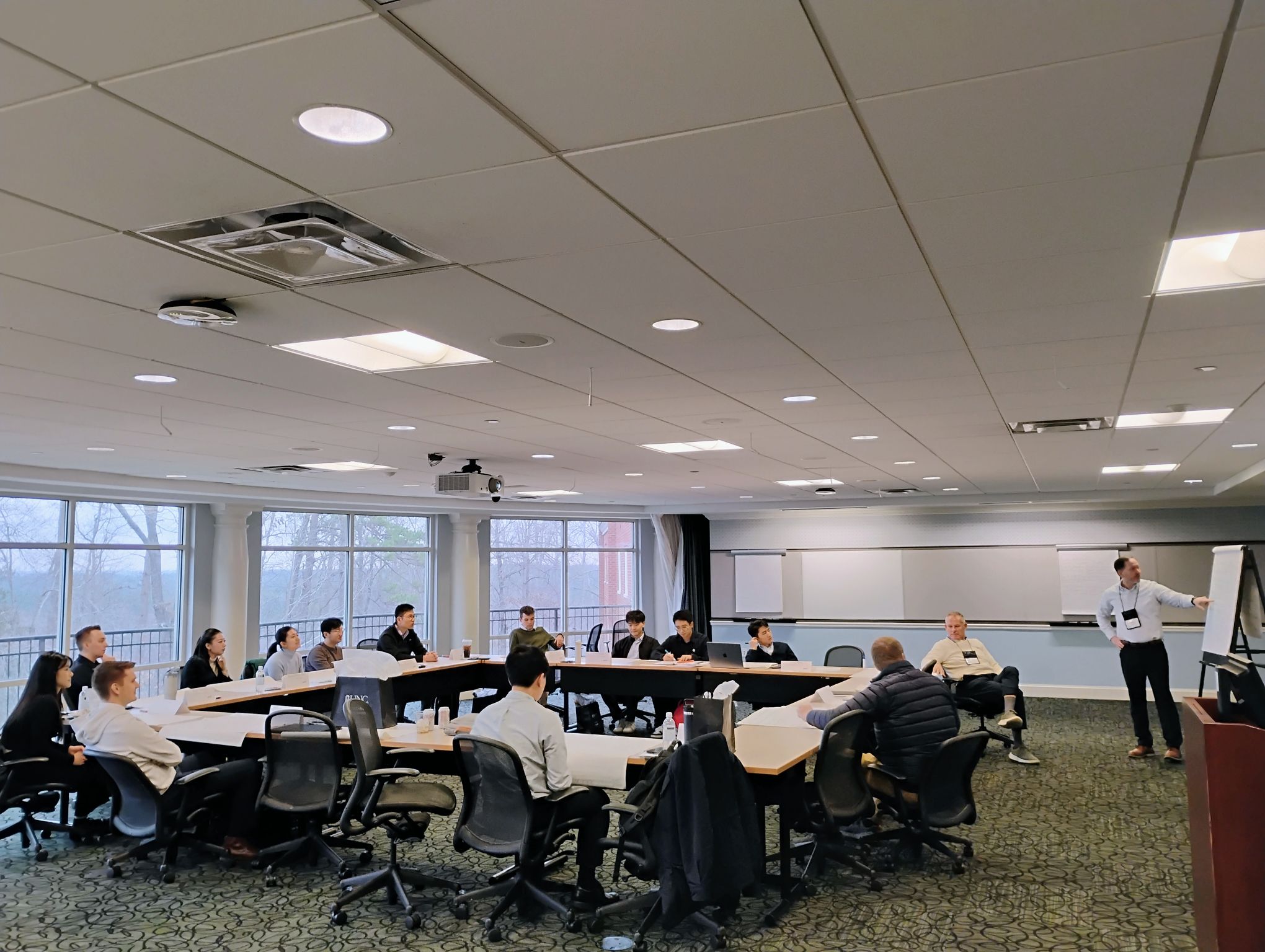
I attended the 17th Annual UNC Tax Doctoral Seminar, held from January 4- 8, 2026, at the Rizzo Center in Chapel Hill, North Carolina. The seminar was organized by the UNC Kenan-Flagler Business School Tax Center and is an invitation-only academic program for selected second- and third-year PhD students specializing in accounting and taxation. The program involved intensive seminar-style instruction, totaling approximately seven to eight hours per day, with substantial preparatory readings assigned in advance.
The seminar brought together a small cohort of doctoral students from leading universities worldwide and aimed to provide advanced training in frontier tax research, research design, and professional development. Sessions were taught by leading scholars from UNC and other top institutions, as well as experienced practitioners, fostering deep academic engagement and discussion.
The seminar opened with welcoming remarks by Dr. Jana Raedy, followed by an introductory session led by Professor Edward Maydew, who outlined the core foundations of tax research and framed key research questions in the field. This session provided a useful roadmap for understanding how tax research contributes to broader debates in accounting, finance, and public economics.
Throughout the seminar, participants engaged in in-depth discussions led by prominent scholars. Professor Stephen Glaeser discussed the characteristics of strong empirical research and the intersection of taxation and innovation, offering practical guidance on research design, identification strategies, and contribution positioning. Professor Scott Dyreng led sessions on tax-motivated income shifting by multinational corporations, emphasizing financial constraints and real economic effects. Additional sessions by Professors Jeff Hoopes and John Gallemore covered corporate tax disclosure, tax enforcement and bank lending, tax policy expectations, and investment behavior.
A highlight of the seminar was the session led by Professor Jennifer Blouin, which examined international tax issues including foreign earnings repatriation, transfer pricing incentives, OECD Pillar Two compliance, and the real effects of country-by-country disclosure, as well as how investors value tax-related information. The seminar also included a practitioner panel with senior PwC professionals, providing insights into current regulatory developments and the interaction between academic research and tax practice.
Beyond formal instruction, the seminar facilitated academic and professional networking through organized social activities and informal interactions. Overall, the seminar was an intensive and highly enriching experience that strengthened my understanding of cutting-edge tax and accounting research and will directly inform my future academic work.