

Webinar Highlights on US-China Rivalry
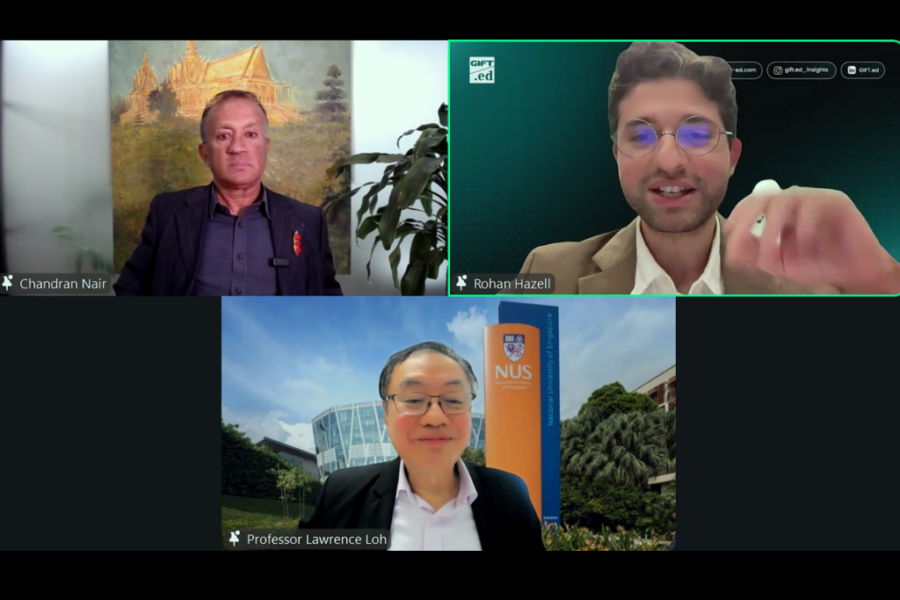
Chandran Nair, Founder and CEO of Global Institute For Tomorrow (top left), Rohan Hazell, Managing Director of GIFT.ed and moderator (top right), and Prof Lawrence Loh, Director of NUS Centre for Governance and Sustainability (bottom), participate in a discussion.
Ditch the competition for the economic pie, and generate conditions for all to have that sustainable bowl of rice (or briyani).
This analogy was raised during the 19 March webinar “Beyond the Binary Lens: Implications of US-China Rivalry for Policy and Business”, featuring Prof Lawrence Loh, Director, NUS Centre for Governance and Sustainability (CGS)/Well-being and EESG Alliance (WEGA), Chandran Nair, Founder and CEO, Global Institute For Tomorrow (GIFT), and moderator Rohan Hazell, Managing Director, GIFT.ed.
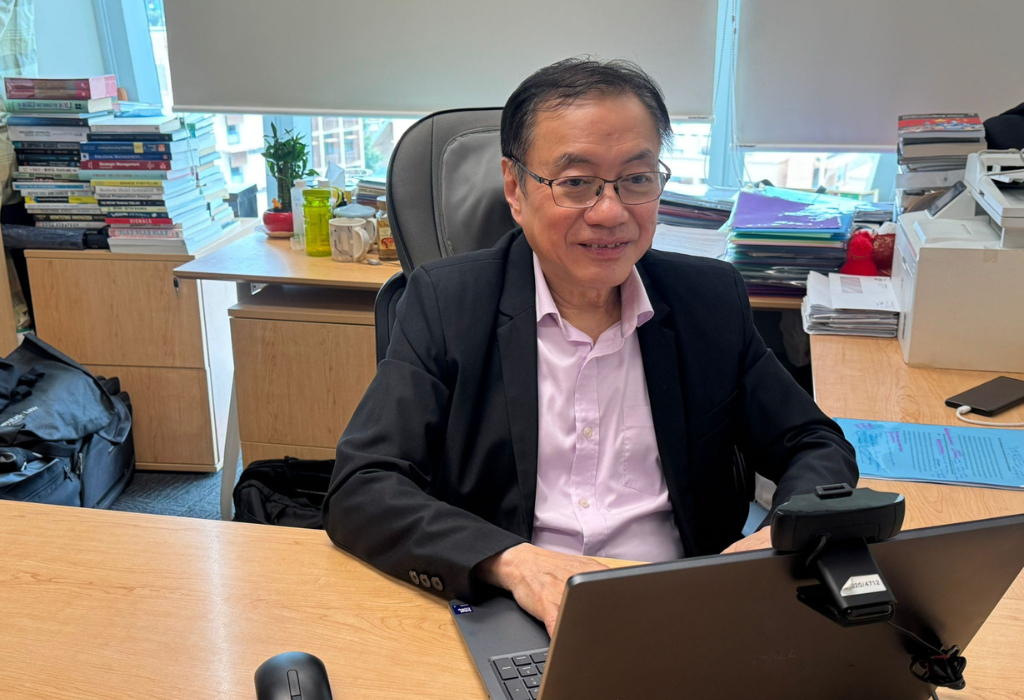
On whether the US-China rivalry will benefit ASEAN, Prof Loh shared that the displacement of businesses towards ASEAN may seem beneficial, but one has to watch out for the curtailment effect, where the overall economic pie becomes smaller. “The best thing that ASEAN wants to hope for is no tension, no war… so the pie can get bigger.”

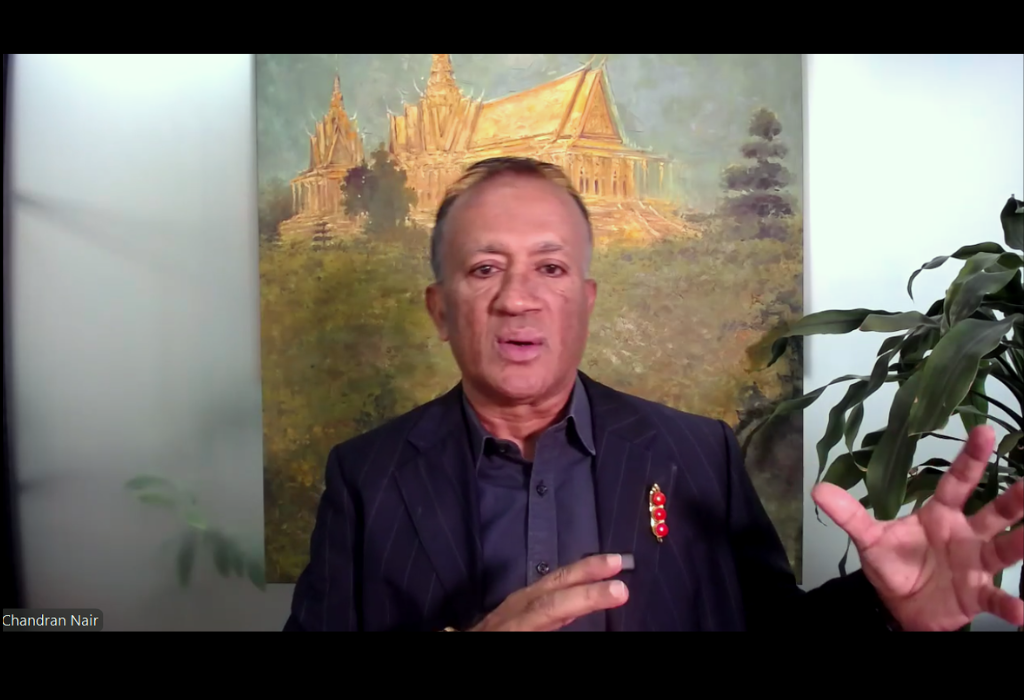
On that note, Mr Nair suggested that maybe we can live with a smaller pie, as planetary resources are finite. In another food analogy, he asked the audience what it takes to sustain a bowl of rice. “Would it be to have enough padi fields, instead of giving the land to data centres?” If we move away from Western dominance narratives and gain economic self-sufficiency, what would a bowl of rice and a good life look like in ASEAN in 2060?
Amidst geopolitics, Prof Loh advised companies not to take sides, but to take a stand that is principled, rational and responsible. Eventually, we are moving away from the era of pizza to the era where countries of briyani and chow fan (fried rice) stand firm.